- How most venues sell VIP tables today (and why it's costing them)
- What Fourvenues' 3D map does
- What the operator gets
- The full picture
Turn insights into smarter operations
Get startedShare
5 min read
May 19, 2026
The 3D floor map that sells: Fourvenues and the future of VIP reservations
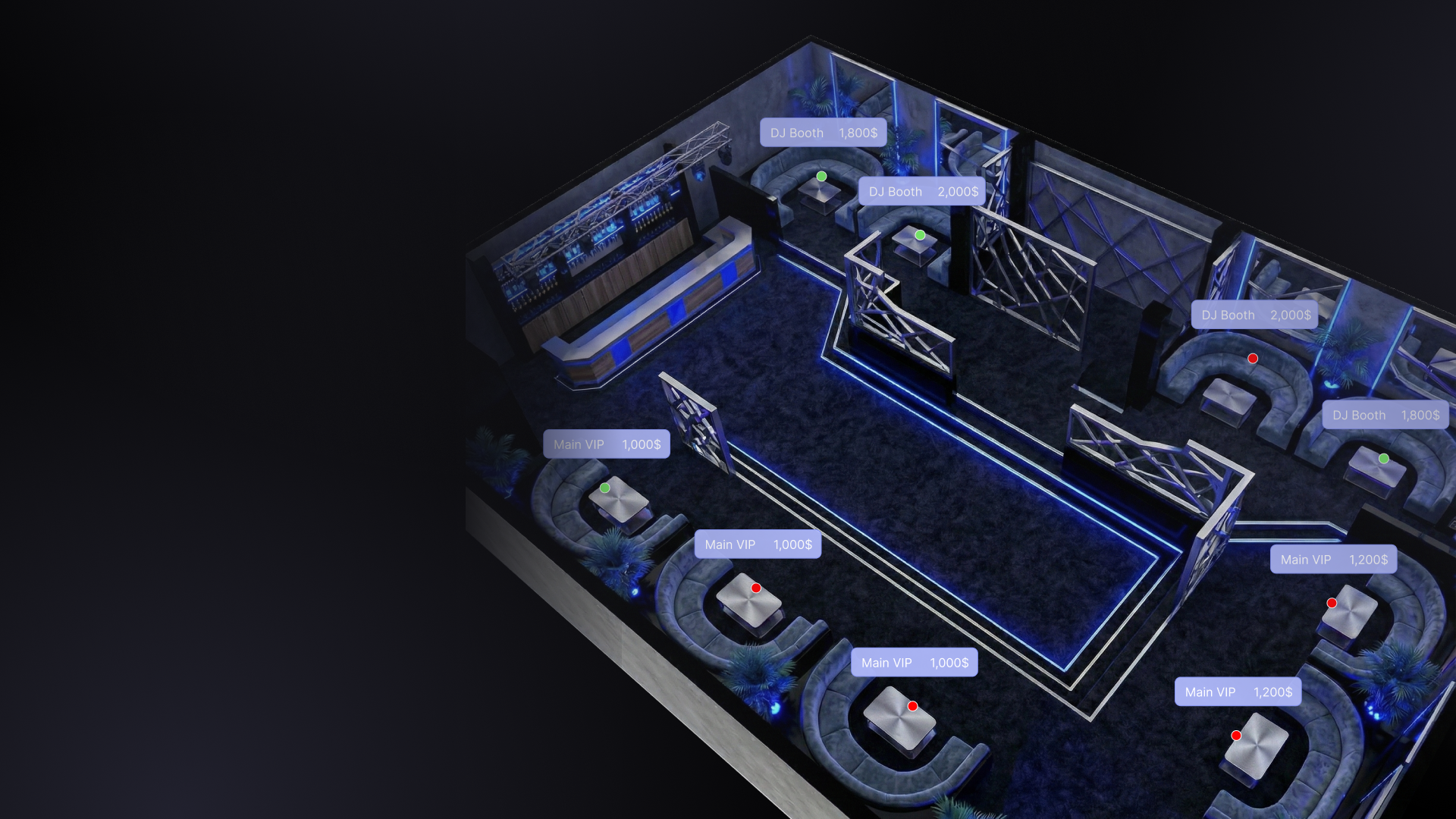
Most venues are still selling VIP tables through a back-and-forth WhatsApp thread or a list with zero visual context. Fourvenues' 3D map integration lets the customer pick their table directly from an interactive map of the venue, seeing the real layout, the exact space, and making an informed decision without needing a middleman. Faster sales process, better experience for your guest, more conversions.
How most venues sell VIP tables today (and why it's costing them)
Ask any club manager how their VIP reservation process works and you'll hear different versions of the same answer. The guest reaches out via DM, phone, a contact form, or a call center. Someone on the team responds, describes what's available, goes back and forth a few times, and manually closes the booking. If there's some organization, there's a spreadsheet. If there isn't, there's a WhatsApp thread someone has to decode the night of the event.
This process has two problems that operators tend to accept as unavoidable.
The first is conversion. Every step between a guest's initial interest and a confirmed, paid reservation is a chance to lose them. A guest who wanted to book a table on Tuesday night and didn't hear back until Wednesday afternoon may have already made other plans.
The second is inventory control. When reservations are managed manually or across multiple channels at once, the risk of double bookings, miscommunication between staff, and last-minute chaos on the floor is constant. A table held for someone who never confirmed ends up blocking revenue — or creating a problem at the door.
Both issues share the same root cause: the booking process gives the guest no visual context for what they're actually buying, which means every step has to go through a human intermediary.
What Fourvenues' 3D map does
The 3D map is an integration built entirely by Fourvenues. It requires no technical work from the organizer's team and plugs directly into the reservations flow. Instead of selecting a table from a list or a text description, the guest interacts with a 3D map of the venue's actual layout. Every table, booth, and VIP section is represented visually. The guest can navigate the space, see exactly where each spot sits in relation to the stage, the bar, and the dance floor, and select the specific table they want to book.
What makes this commercially relevant isn't just the visual experience, it's what that experience does to the guest's decision-making process. When they can see that Table 12 is front row left of the stage and Table 8 is near the bar, they're not choosing between two abstract options on a list. They're making an informed decision about a specific experience. That clarity eliminates hesitation, cuts down on back-and-forth questions, and shortens the path from interest to confirmed booking.
When proximity to the DJ booth or a front-row cabana is part of your value proposition, showing it is more persuasive than describing it. The upgrade sells itself.
What the operator gets
Every reservation made through the map flows directly into Fourvenues' reservation management system. You get real-time visibility into which tables are confirmed, which are pending, and which are still available — without reconciling information from different sources. When a table is booked, the system reflects it instantly. No double bookings. No manual updates.
The integration also connects to the prepayment and deposit flow. The guest who selects a specific table completes the booking with a deposit at the time of purchase, not after a follow-up message, not the night of the event. That commitment changes the no-show dynamic entirely. A guest who has paid to lock in a specific space they chose themselves shows up at a significantly higher rate than someone who made an informal reservation over the phone.
On event night, the floor team works from a single source of truth: which tables are confirmed, who's expected, what the minimum spend is for each section, and which spots are still open. That clarity reduces the coordination friction between the reservations team, the floor manager, and the door: three roles that in most venues are working off different information and reconciling it under pressure at 1 AM.
The full picture
VIP reservations are the highest-margin product most nightlife venues sell. They're also the product with the most operational complexity and, historically, the most friction in the buying process.
A map removes the biggest barrier to a guest committing: the inability to visualize what they're purchasing. When a guest can see the space, choose their table, and complete the booking with a deposit in a single uninterrupted flow, no waiting for confirmation, no ambiguity and conversion goes up, no-shows go down, and the operator has cleaner data before the night even starts.
This isn't a minor UX improvement. It's a structural shift in how you sell your highest-value product.
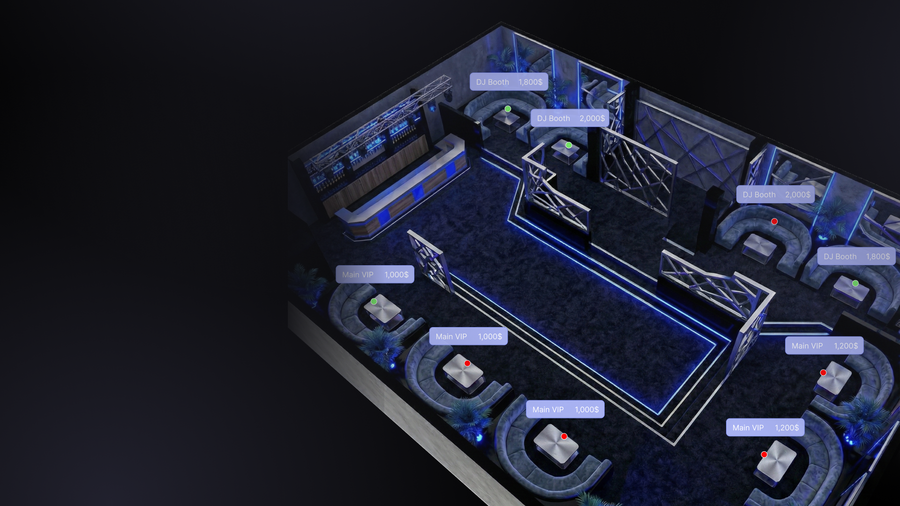
Learn more about how Fourvenues’ 3D map works and how it can help you sell more VIP tables
Request information