- Why treating the gate as a secondary channel is costing you
- What an operator loses without an integrated box office
- What changes with a box office built into the system
- Door pricing: the margin lever most operators don't use
- Box office and pre-sale: two channels, one system
Turn insights into smarter operations
Get startedShare
5 min read
May 14, 2026
Box Office: the revenue channel you're not running right
Pre-sale gets all the operational attention, but the box office still drives a meaningful share of revenue at most events. The problem isn't that day-of sales are an outdated channel. It's that most operators run it like it is: cash-heavy, no data, disconnected from the rest of the system. This article breaks down what's broken in gate operations, how much margin and information slips through the cracks because of it, and how an integrated box office connected to ticketing, access control, and CRM changes that equation.
Why treating the gate as a secondary channel is costing you
Most operators put their resources, attention, and tech behind optimizing advance sales. All that work makes sense. But the moment doors open, the box office runs on completely different logic: one person with a cash drawer, a card reader, and on a good night, a spreadsheet to log sales.
The outcome is predictable. Gate revenue doesn't reconcile with pre-sale until the closing report. Pricing strategy becomes guesswork at the door. Guest data never makes it into the system. And the slow process creates a line right at the first physical touchpoint with your customer, degrading the experience before they've even walked in.
At events with strong walk-up demand, like nightclubs, festivals with on-site sales, and seasonal beach clubs, it can account for up to 20% of total revenue for the night. Running it in isolation leaves both dollars and data on the table.
What an operator loses without an integrated box office
The problems of a disconnected box office always fall into the same three buckets.
- Revenue with no traceability. Without integration between gate sales and your ticketing system, you don't have a single read on total revenue until someone manually consolidates closing reports from each channel. That means you're operating on partial data during the event, and the real number lands when it's too late to act on it.
- Guest data that doesn't exist. A guest who pays cash at the door leaves no trace in your database. You don't know who they are, how many times they've come back, what they consumed, or how to retarget them for the next date. In a business model where guest recurrence is a direct revenue lever, losing that information is a real cost, even if it never shows up on a P&L.
- Lines and friction that suppress spend. A slow box office delays the moment that guest walks in, gets to the bar, and starts contributing to the night's revenue. Every minute spent waiting in line is a minute that guest isn't ordering a drink.
What changes with a box office built into the system
The operational shift is about that sale living inside the same system that handles pre-sale, access control, CRM, and consumption.
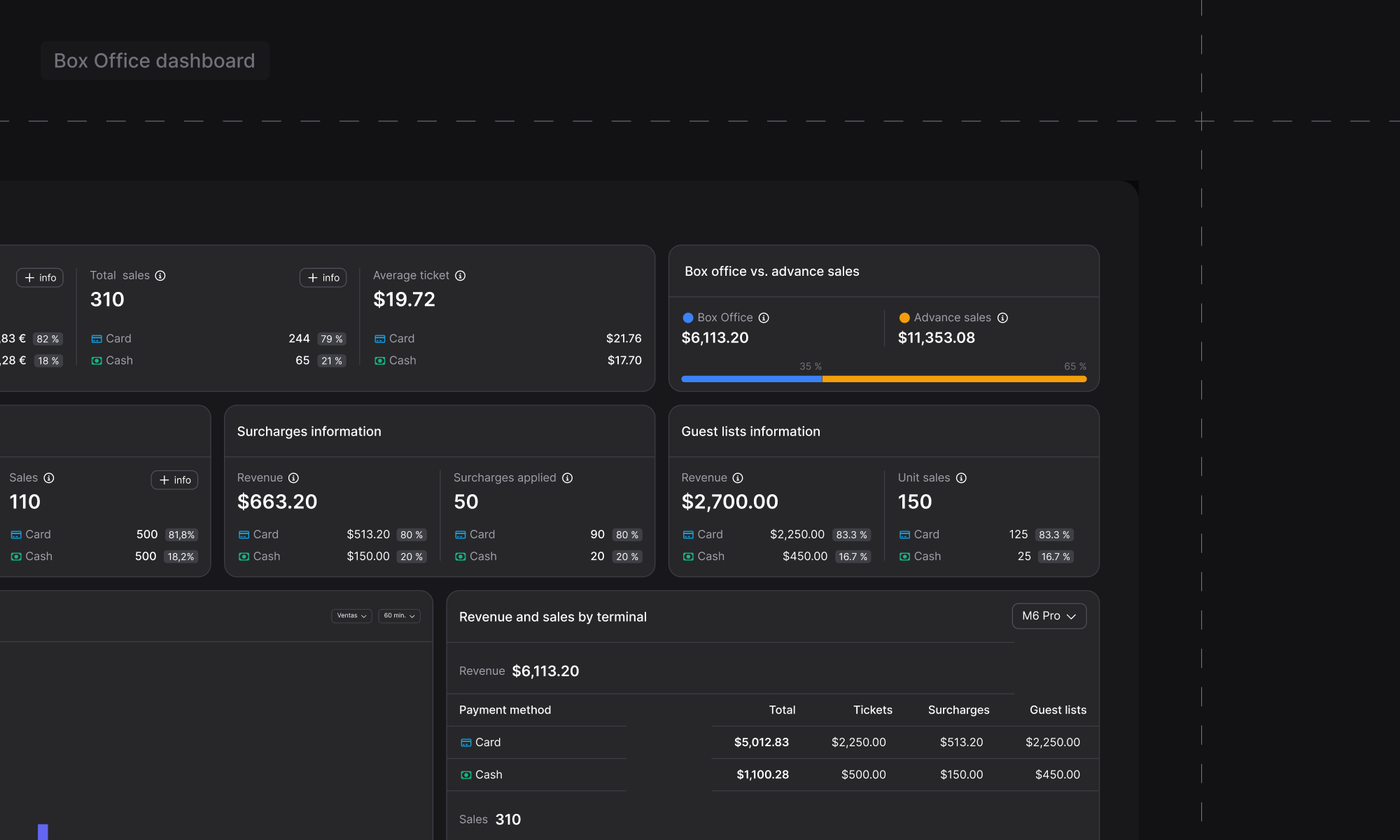
With the Fourvenues Box Office, every gate sale is logged in real time inside the same dashboard as advance sales. At any point during the event you can see total revenue to date, which channel is driving the most volume, and what your entry pace looks like. Not the next morning. While it's happening.
Gate sales also capture guest data at the moment of purchase through the online box office mode. That information feeds directly into the CRM, building the customer profile the same way an online purchase would. The guest who showed up at the door is no longer anonymous. They're a contact you can reactivate for the next event.
On top of that, because the box office is integrated with access control, the gate sale automatically generates the QR code. No manual handoff, no duplicate ticket risk, and real-time capacity reads as guests walk in.
Door pricing: the margin lever most operators don't use
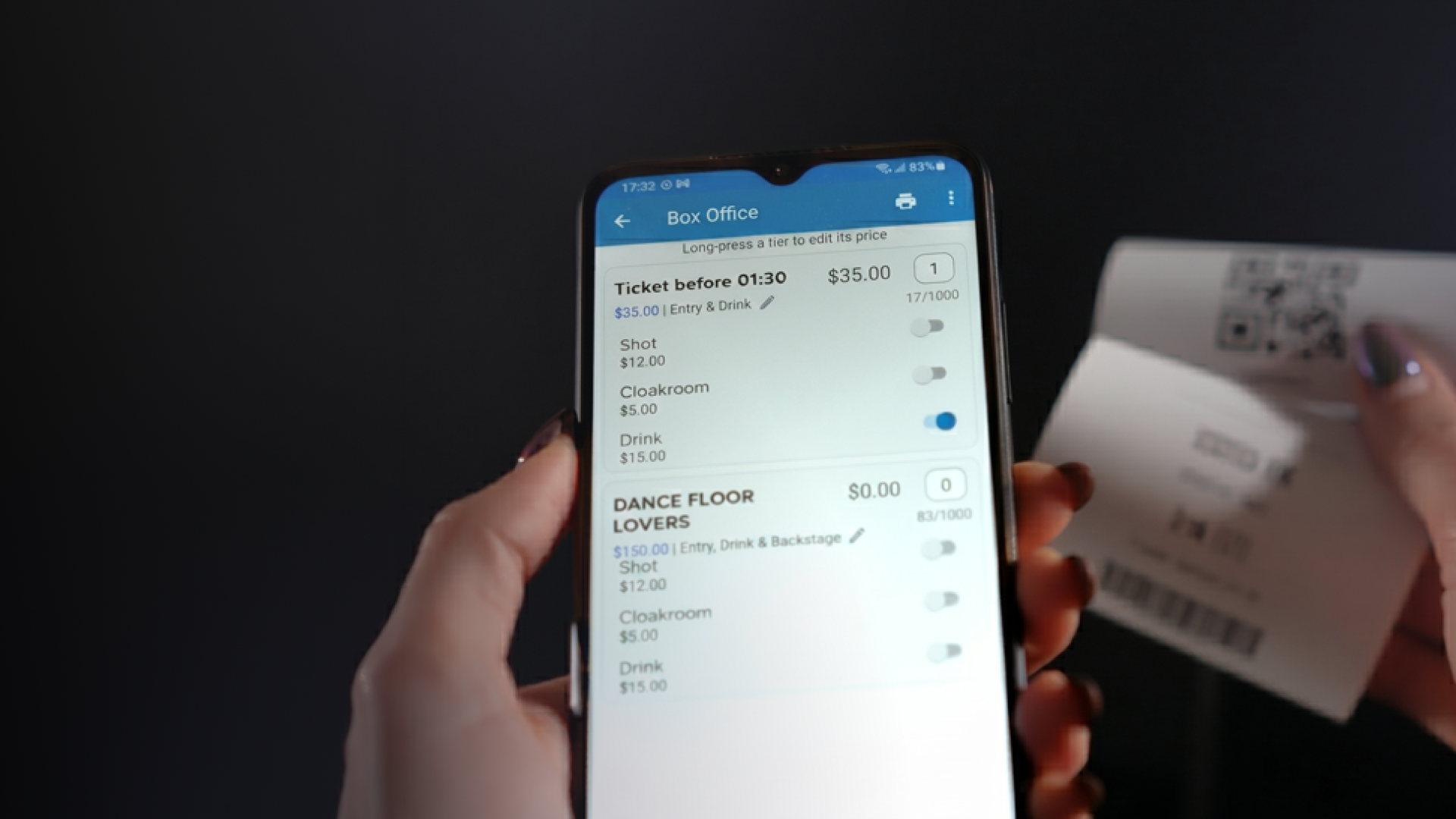
One of the strongest arguments for investing in a professional box office operation is differential pricing. At most events, the walk-up price runs higher than the advance ticket. That price gap is pure margin, but you only capture it efficiently if your gate system can handle multiple price tiers, apply the right rate based on entry time or capacity, and log every transaction accurately.
With a disconnected box office, that price gap is hard to control. There's discretion in how rates get applied, no record of what price each guest actually paid, and the closing count doesn't tell you whether the expected margin materialized.
A box office integrated with the ticketing system guarantees the right rate is applied at the right time, removes pricing discretion from the door staff, and gives you the exact record of what was charged, to whom, and when.
Box office and pre-sale: two channels, one system
The goal isn't to pick between optimizing advance sales or the box office. The operators with the cleanest read on their business run both channels from the same system, because that's what enables real-time decision-making.
When pre-sale, box office, and access control are unified in Fourvenues, the operational read is complete. You know total sales to date, your walk-up versus advance ratio for each event, the pace at which guests are coming through the door, and the impact that has on bar revenue. That consolidated view is what lets you decide whether to drop the gate price in the final stretch of the night, reinforce the access team ahead of a demand spike, or flag a conversion problem in one of the channels.
Optimize your box office, capture every guest's data, and consolidate all revenue in real time. Turn the gate into a revenue lever as controlled as your advance sales.
Is your box office still generating revenue you can't track? Connect your box office with the rest of your operation and take control of every sales channel with Fourvenues.
Request information