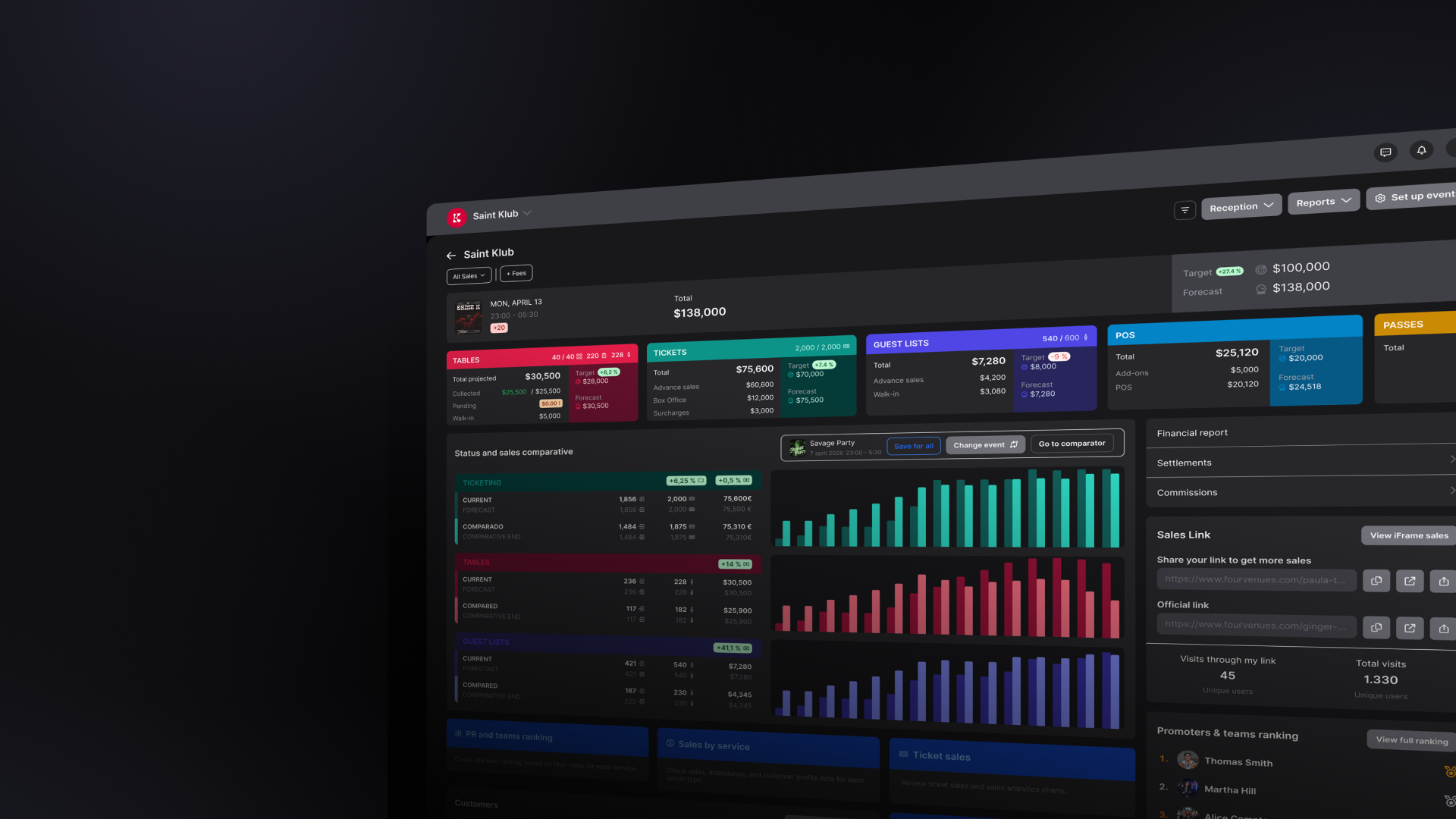
- The problem with going on gut feel
- The five metrics that separate a good night from a profitable one
- How to read the full picture before making the call
- From post-event review to programming strategy
Turn insights into smarter operations
Get startedShare
7 min read
Jun 17, 2026
What to look for in the post-event report before deciding whether to rebook an artist or repeat a session
The Monday after a great night it's easy to ride the high. Packed house, charged atmosphere, happy staff. But "it was a good night" is not a programming strategy. If your decision to rebook an artist comes down to vibes, you're operating with the same tool that's been bleeding money out of venues for decades. This piece walks you through exactly what data to review after every event, in what order, and what it needs to tell you before you sign anything for next season.
The problem with going on gut feel
Music programming is one of the highest-impact financial decisions a venue makes, and one of the least rigorous. An artist gets rebooked because "the crowd loves them," because the promoter pushes for it, or because it was a night everyone remembers. None of those reasons are wrong on their own — but none of them tell you whether that night was actually profitable, for whom, and whether it makes sense to repeat it at the same fee.
The result is a calendar built on perception. Artists who fill the room but leave thin margins because their fee ate the profit. Sessions that drive strong door numbers but don't attract the kind of customer who drinks. Nights that blow up on Instagram and barely move the needle on revenue.
Breaking that pattern starts with a post-event report that goes well beyond ticket count.
The five metrics that separate a good night from a profitable one
- 1Average ticket price by channel
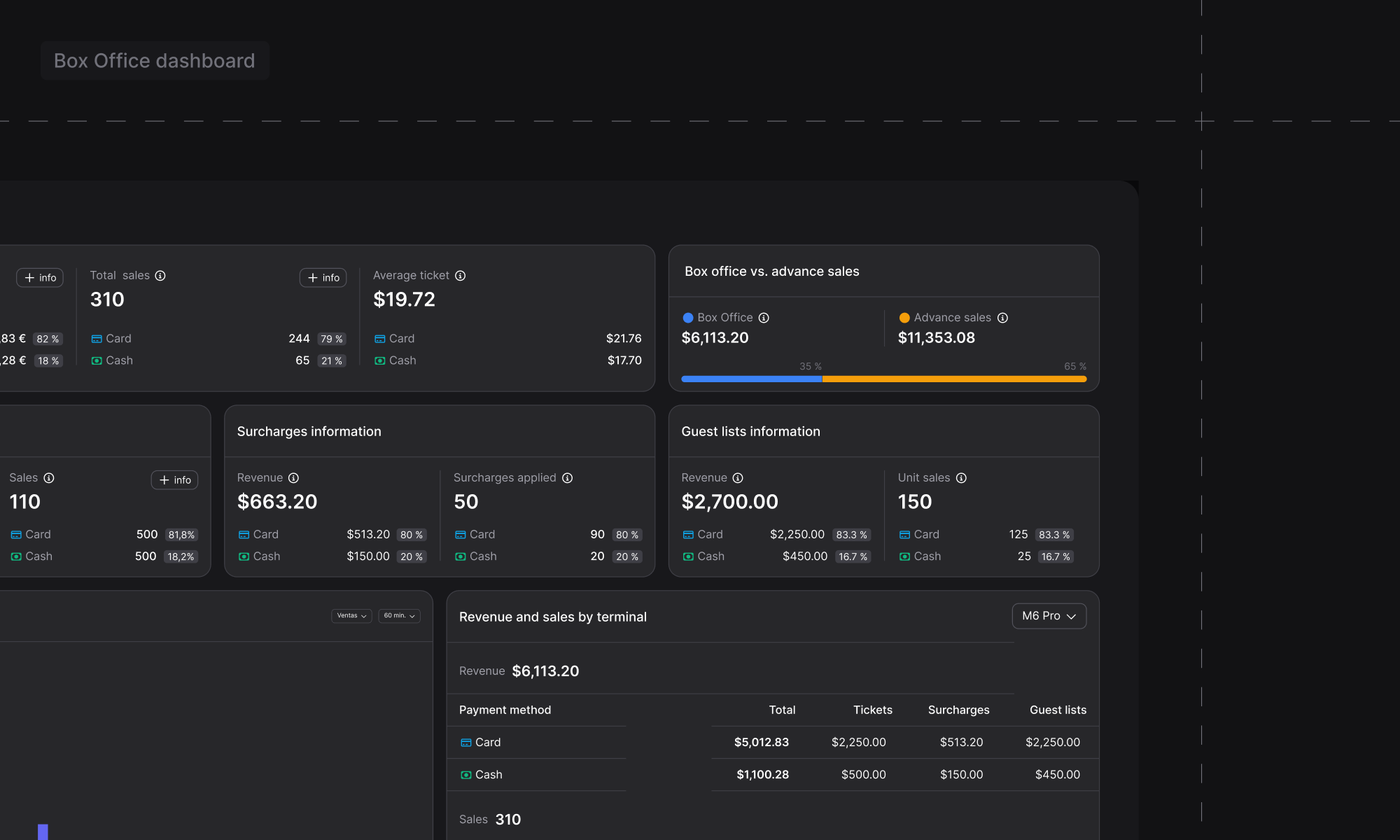
The first thing to look is how much each attendee paid on average and through which channel. There's a real difference between a venue that moves 800 tickets at a $12 average and one that moves 600 at an $18 average. The second grosses more with a lighter house and, typically, lower operational cost.
Break that average down by channel: direct presale, door, guest list, and promoter networks. If most of your attendance walked in on a comp or a free list, the "full room" story is misleading. A packed venue where nobody paid is an atmosphere win, not a revenue win. That's fine if it's intentional but it needs to be a conscious decision, not a blind spot.
- 2Bar spend per attendee
This is the number most venues ignore and the one that tells you the most about the real quality of the night. Divide total POS revenue by total registered attendees. That ratio shows you how much each person who walked in actually spent.
A night with 1,000 attendees and $8,000 in bar sales generates $8 per head. Another with 600 attendees and $7,200 generates $12 per head. The second night, with a third fewer people, is more profitable per attendee. If you're only looking at headcount, you're making the wrong call.
Cross that number against session type, genre, and crowd profile. Over time, patterns emerge: what kind of programming brings in the customer who actually drinks, what time spend peaks, which areas of the floor perform. That's the data your booking decisions should sit on.
- 3Presale-to-door ratio
A night where 80% of your house bought in advance is structurally different from one where 80% walked up to the box office. The first gave you financial visibility before the event, let you adjust production with real numbers, and reduced the operational pressure at access points. The second was a bet.
This ratio also signals something about the crowd profile. The person who buys early plans ahead, has stronger intent to show up and, statistically, spends more once inside. The walk-up buyer often arrives late, catches the tail end of the atmosphere, and consumes less.
If a session consistently shows a low presale ratio, you have two possible reads: either the artist doesn't generate enough anticipation for people to commit early, or your presale communication strategy isn't working. Either way, it's a data point that belongs on the table before you renew.
- 4Performance by sales channel and promoter network
If you run a promoter network, the post-event report needs to include a breakdown by rep. How many entries each one managed, how many of those attendees actually checked in, how many were no-shows, and what that means in commissions paid on access that never happened.
Running a promoter operation without data is one of the most common revenue leaks in the industry. Commissions paid on lists that were never verified, overlapping guest list allocations across reps, names appearing on multiple lists at once. When you have a system that logs the actual check-in of each attendee tied to the rep who managed them, you can calculate the real cost per attendee by channel and decide whether that network is generating value or just inflating your headcount without moving the register.
- 5Peak activity window and floor flow
Pull the access curve by hour and lay it next to your POS sales curve. Those two charts together tell you when people arrived, when they spent, and when they stopped. A sharp drop in bar spend at 1:00 AM on a night that runs until 5:00 AM is a retention problem — and it could mean a dozen different things: the music programming, the in-room experience, bar pricing, or simply that the crowd that session attracts has a different consumption pattern.
This analysis also sharpens your staffing decisions. If 70% of your bar revenue lands between 12:00 AM and 2:00 AM, you need full coverage during that window — not spread evenly across the whole night.
How to read the full picture before making the call
None of these metrics work in isolation. A high average ticket with low bar spend might mean the artist pulls a crowd that pays the door but doesn't drink. High bar spend with a weak presale ratio might be profitable once but fragile as a model — one bad weather weekend, one competing event, one last-minute cancellation and the night falls apart.
The rebook decision needs to be based on the full picture. And to read the full picture, all of that data needs to speak the same language: ticket revenue, door access, POS spend, and acquisition channel connected inside one system. When that connection doesn't exist, you're reading four separate reports that can't be crossed, and your decisions are as partial as your data.
From post-event review to programming strategy
The post-event report is the starting point for your next booking decision. If after three editions with the same artist you consistently see low bar spend, a flat presale ratio, and zero retention across sessions, you have enough to make a different call without needing to justify it to anyone with a subjective argument.
The flip side: if a session with a lower-fee artist generates a higher ticket average, a stronger presale ratio, and bar spend 30% above your baseline, that's a signal you have something worth scaling and that you're probably undervaluing it.
Own your programming with data. Gut feel has its place, but it can't be the only tool on a decision that moves five figures every weekend.
Ask our team and start running your events
Request information