- It's not a hype play
- The real problem it solves
- How to make it work inside your sales strategy
- The long game: The database that sells next year's edition
- The numbers you need to track
- What you need to have in place
Turn insights into smarter operations
Get startedShare
6 min read
Jun 10, 2026
Festival pre-registration: Build your audience before tickets go on sale
Pre-registration is an operational tool that, when used correctly, lowers the acquisition cost of every ticket you sell, drives conversion in the first hours of your on-sale, and starts building next year's database before this year's event is even over. If you're treating it as a way to gauge interest, you're leaving real money on the table.
It's not a hype play
There's a common misconception in the festival business: pre-registration is marketing fluff, a warm-up act before the big announcement. That framing completely undervalues what it can actually do for your bottom line.
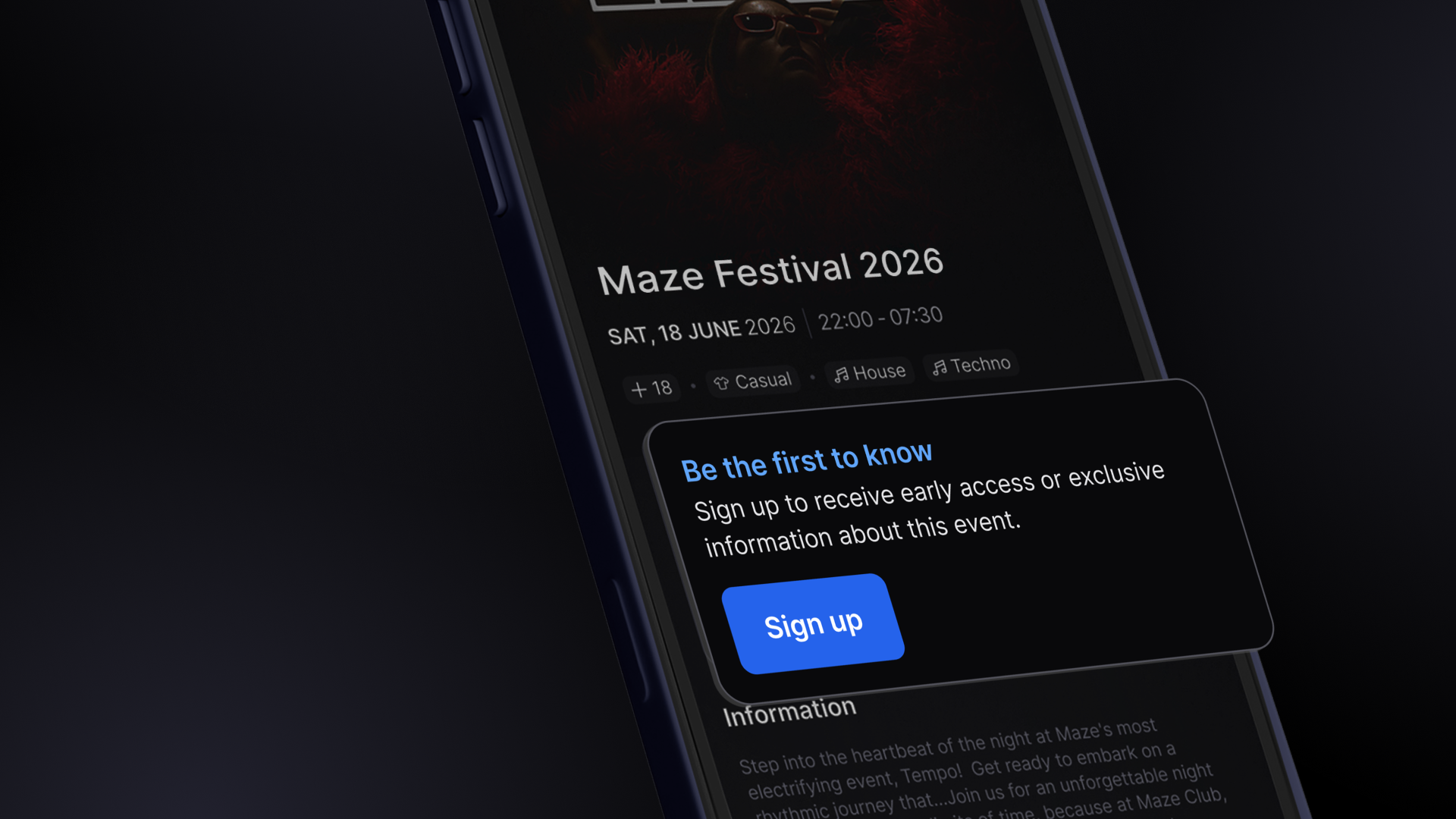
Every person who registers before your on-sale is raising their hand and telling you something specific: I intend to go, give me early access. That signal has immediate commercial value and long-term strategic value. The difference between a pre-registration campaign that performs and one that doesn't isn't in the landing page design. It's in what you do with that audience once you have it. Most organizers capture the list just fine. Where almost everyone drops the ball is everything that comes after.
The real problem it solves
Think about what your on-sale looks like. It's the single highest-demand moment of your entire year. Everyone hits the page at once, your ticketing system takes a massive traffic spike, and you, as the organizer, don't actually know how many people are going to try to buy, where they're coming from, or whether your Phase 1 price is within their willingness to pay. You're working off the aggregated, opaque data that a third-party marketplace shares with you, if they share anything at all.
Pre-registration solves that directly. Before you open sales, you already have a list of people with names, emails, home cities, and a documented history of engagement with your brand. That's business intelligence that changes how you make decisions from day one.
How to make it work inside your sales strategy
- Before launch: Build the list with intent. Pre-registration only works if it offers something concrete in return. "Sign up to hear about it first" isn't a compelling reason to hand over an email address. You need a real incentive: early access to Phase 1 at the lowest price of the run, an exclusive rate only available to registered attendees, or a guaranteed spot in the queue before general sale opens to the public.
Open it during your communication warm-up window, the period when you're already building momentum with lineup drops or date announcements but haven't started selling yet. That's when purchase intent is activated but the decision hasn't been made. It's the best possible moment to capture it. And set up the form to collect the data you'll actually use: email, city, and any variable that helps you segment later. The richer that list is from day one, the more precise your launch campaign can be.
- On launch day: Turn intent into transactions. You have a list of people who raised their hands. You have their data and their attention. What you do in the next few hours determines how much of that intent converts into sold tickets.
The mechanics are straightforward: send your pre-registered list an email or SMS with priority access to the purchase link before general sale opens. Not minutes before, early enough that the exclusivity feels real. That sense of privileged access removes the most common psychological friction in ticketing: the hesitation between buying now and waiting. It also creates a controlled first wave of sales before the general on-sale spike, which gives you real-time data on conversion pace and lets you adjust your public messaging if things move faster or slower than expected.
- After launch: The data nobody activates. Once general sale opens, the pre-registered contacts who didn't buy almost always get left in a drawer. That's the most expensive mistake in the whole process.
These are warm leads. They showed active interest. If they haven't purchased in the first 48 hours, there are specific reasons: the price was outside their range, the timing wasn't right, they were waiting to confirm plans with their group. A segmented follow-up at the right moment, with the right angle, whether that's an incoming price increase, the end of Phase 1 availability, or a new lineup announcement can recover a meaningful chunk of that audience. But doing that well requires your ticketing platform to be connected to your CRM. Not two separate tools you sync manually, but a system where you can see in real time who registered, who bought, and who didn't, and run a different campaign to each group accordingly.
The long game: The database that sells next year's edition
This is the strongest argument for pre-registration, and the one most organizers never fully articulate.
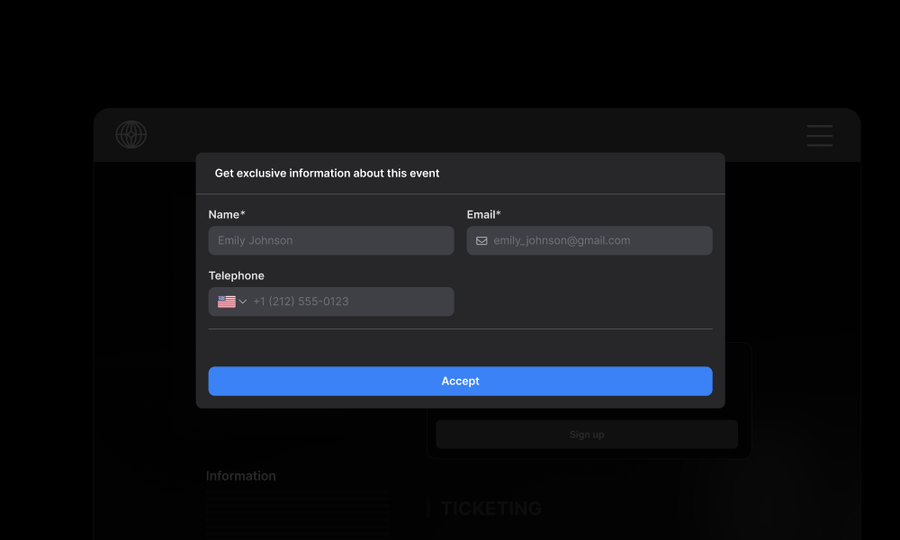
Every person who registers, even if they don't buy, is a contact you've captured with explicit consent. That data is yours. It's not sitting in a marketplace's database under terms that can change tomorrow. It's in your CRM, tagged, with behavioral history, and ready to activate for the next edition. If your festival draws 10,000 attendees and you can get 30% of them through a pre-registration flow before you open sales next year, you're going into your on-sale with 3,000 high-intent contacts already in the funnel. That changes the cost and velocity of your first sales wave entirely. The gap between a festival that grows consistently year over year and one that starts from scratch every cycle comes down, in large part, to whether it knows how to build and activate its own audience.
The numbers you need to track
Running pre-registration isn't enough on its own. The metrics that matter are few and concrete: total registrations, geographic breakdown of the list, percentage of registrants who purchased within 24 hours of launch, and final conversion rate of the full list by the close of Phase 1. Those four data points tell you whether your incentive is compelling enough, whether your acquisition campaign is reaching the right audience, whether your send timing is calibrated correctly, and whether your Phase 1 price is actually within range for your crowd. Without those numbers, pre-registration is a form. With them, it's a decision-making system.
What you need to have in place
Pre-registration doesn't operate in isolation. For it to deliver what's been described here, it needs to be embedded in a system that connects acquisition, communication, and ticketing in a single flow: a landing page that collects the right data under your own brand identity, not a third-party vendor's; an email and SMS platform that lets you segment and automate based on list behavior; and a ticketing system that makes the jump from "registered" to "purchased" fully trackable and actionable.
When those three pieces work as a unified system rather than separate tools, pre-registration stops being a one-off marketing tactic and becomes the commercial foundation you build every new edition on.
Put it into practice
Set a concrete incentive, open the form during your warm-up window, and design at least three communication touchpoints: priority access on launch day, a recovery campaign for non-buyers at 48–72 hours, and a full-list reactivation tied to any significant lineup announcement. Measure conversion at each stage. That number, more than any other, tells you how well you're capitalizing on the demand that already exists around your festival.
Activate it before your festival launch with Fourvenues
Request information