
- The mistake of treating the door as your only revenue source
- Before the event: the highest-intent moment of the night
- During the event: where your POS and floor management make the difference
- After the event: the loop almost no one closes
- Revenue isn't just at the door
Turn insights into smarter operations
Get startedShare
5 min read
May 12, 2026
Nightlife upselling: Grow your average spend without raising ticket prices
Your ticket price is just the starting point. The nightlife operators driving the most revenue growth aren't necessarily the ones charging the most at the door — they're the ones who've built a system to capture more spend before, during, and after the event. Here's what those levers look like and how to activate them without killing the guest experience.
The mistake of treating the door as your only revenue source
Most operators measure a night's success with two numbers: tickets sold and door price. If the venue filled up and the price held, it was a good night.
The problem is that this mindset leaves money on the table every single weekend.
A guest who pays $20 at the door can end up spending $80 that night if you have the right mechanisms in place. That gap is where your real margin lives. And most operators don't manage it systematically. They leave it to whatever the guest decides to buy at the bar.
Upselling in nightlife is about offering the right product, to the right guest, at the right moment.
Before the event: the highest-intent moment of the night
The moment a guest is buying their ticket is probably when they're most willing to spend. They've already committed to showing up, their attention is on the event, and the purchase decision has been made. If you have nothing else to offer them at that point, you're closing a window that won't reopen the same way.
The most straightforward mechanic is add-ons at checkout: a welcome drink, skip-the-line access, a standard-to-VIP upgrade, a drink package. Each one has a low implementation cost and a direct impact on average spend. The key it's surfacing the most relevant add-on for your customer profile at the right moment in the flow.
A festival that adds an "early entry + drink package" option at checkout can increase average spend by 15% to 25% without touching the base ticket price. The add-on doesn't feel like an extra charge; it feels like a better experience.
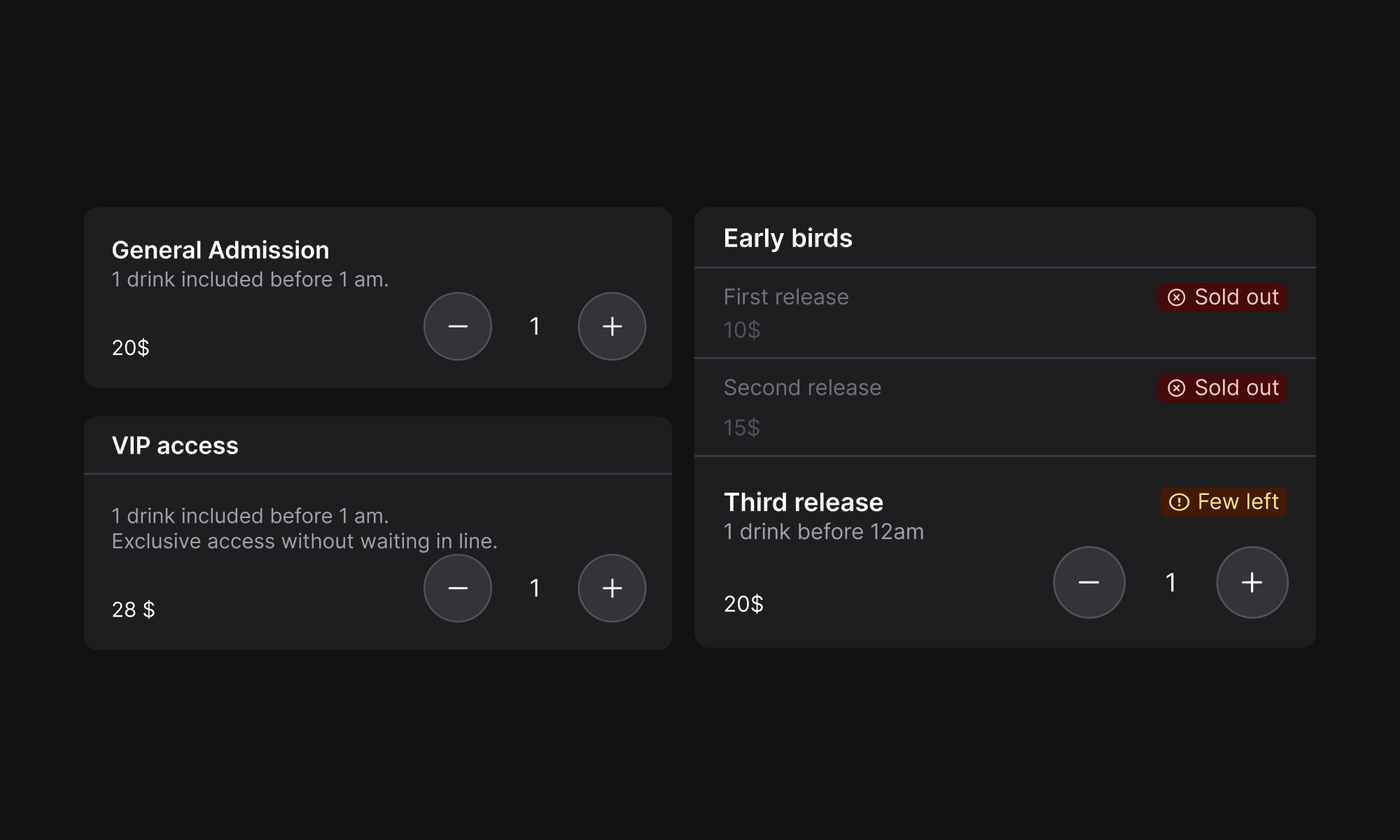
Tiered pricing works under the same logic, but only if each price point comes with a genuinely different value proposition. General admission gets you in. Premium skips the line and includes a drink. VIP puts you in a specific section of the floor plan. If the guest can't immediately understand what they're getting for the upgrade, they won't take it.
And if your venue has VIP sections or table service, advance reservations with a deposit are a high-impact lever. A guest who books a table before the event has already committed to a minimum spend and is far more likely to exceed it on the night. What typically breaks down here is that these reservations get handled over text or DMs, with no formal confirmation and no deposit collected — which means no-shows, last-minute cancellations, and a chaotic floor plan when doors open.
During the event: where your POS and floor management make the difference
Once guests are inside, upsell shifts to the floor. Your POS is the tool your bar staff and VIP team use to drive spend in a structured way.
In high-volume venues, having your most profitable products and popular combos front and center on the POS screen cuts down order time and increases the average transaction value. A bartender who rings up orders on autopilot without suggesting anything is a constant missed opportunity and that's fixed with tools that make the recommendation easy to deliver in the moment.
Bottle service has its own dynamic. The guest has already committed to a minimum, but how you manage that table through the night determines whether they stay at the minimum or go well past it. A table that's two bottles in at 2 AM has a strong chance of ordering a third if the service is attentive. If your staff has no visibility into the status of each reservation (what they've ordered, how long since the last interaction), that sale doesn't happen.
Real-time floor plan visibility is the difference between a bottle service program running at 60% and one running at full capacity.
After the event: the loop almost no one closes
Most nightlife operators have no post-event strategy. The guest leaves, the night wraps, and nothing happens until the next show. That means every event starts from zero, with no leverage from the behavioral data you've already collected.
If you have data on which guests bought which ticket type, what they consumed, and whether they booked VIP, you can segment your database in ways that actually make commercial sense. High-spend guests are candidates for exclusive pre-sale access. Guests who bought general admission and spent little at the bar might respond well to a bundled offer that lowers the barrier to a better experience.
Without that segmentation, everyone gets the same message and the performance of your email and SMS campaigns suffers for it.
The days right after an event are also a high-intent window. A guest who had a great night at your venue is receptive. Offering them early access to the next event or a loyalty rate turns that openness into committed, advance revenue before it fades.
Revenue isn't just at the door
Raising door prices has a clear ceiling: at some point, volume drops and total revenue doesn't improve. Well-executed upselling doesn't have that ceiling, because it works on the willingness to spend of a guest who has already decided they want to be there.
The difference between operators who do this well and those who leave it to chance isn't that one group is better at selling. It's that they have the systems and the data to activate these levers consistently, night after night.
If you want to take a hard look at where your average spend stands and which levers you're not using yet:
Fourvenues can run the analysis using your own operational data.
Request information