- The problem isn't that you trust your promoters
- What's actually happening inside that list
- The real cost nobody adds up
- What changes when you have a system
- Structure isn't distrust
Turn insights into smarter operations
Get startedShare
6 min read
Jun 18, 2026
What you're not seeing when your promoters manage guest lists on iMessage
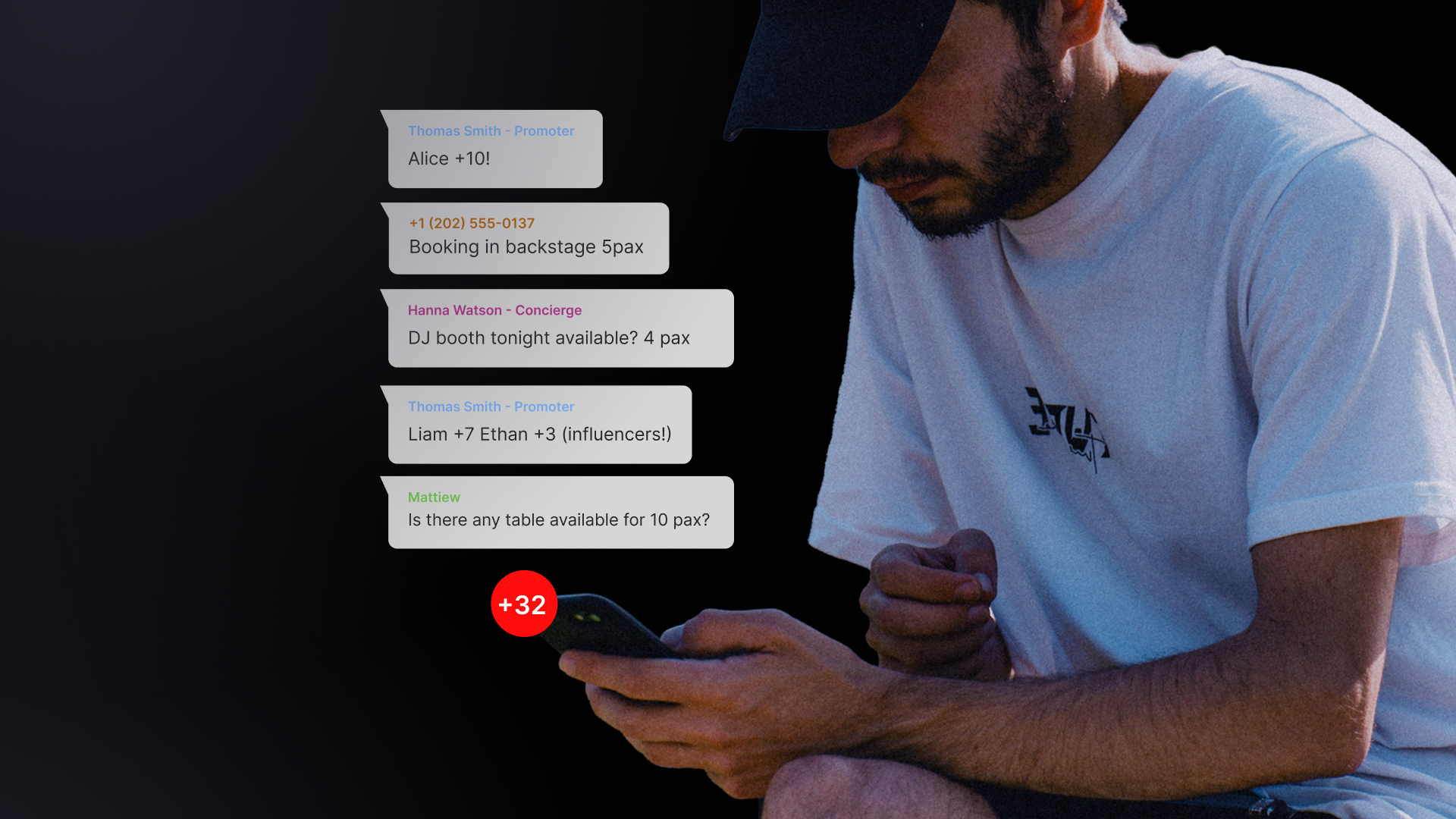
You've got ten promoters working Saturday night. Each one has been collecting names all week over iMessage, text threads, or voice messages nobody's going to be able to verify later. At the door, someone consolidates everything into a spreadsheet or a piece of paper. People get in. By end of night, nobody knows exactly how many people came in through each promoter, how many list names were no-shows, or whether the comp allocations you gave out were respected or doubled up.
You call it promoter management. What it actually is: an access system with no traceability, commissions paid on data you can't verify, and a volume of losses you'll never be able to quantify because you've never had the real numbers.
The problem isn't that you trust your promoters
Managing promoters over iMessage isn't a trust problem. It's an architecture problem. The system is designed to lose information: it arrives fragmented, across different threads, from ten separate sources, and nobody has a consolidated view until it's too late to do anything with it.
When your door staff open at midnight and have a handwritten list of 400 names spread across ten promoters, they're not executing an access system. They're managing chaos on good faith. And inside that chaos, money is leaking in ways that rarely get named out loud.
What's actually happening inside that list
Commissions on no-shows
The most common model is paying promoters per head, a flat amount for each person on their list who actually walks in. The problem is that in most venues, that payment gets calculated on names submitted, not on verified check-ins. If a promoter has 80 names on their list and only 55 show up, in many cases they get paid on 80, because nobody ran the cross-check.
The difference between paying on submitted names versus verified check-ins can represent 20 to 30% of total promoter commissions on a given night. On a mid-volume Saturday, that's hundreds of dollars leaving your register for access that never happened.
Overlapping allocations
You give each promoter a comp allocation of 50 people. But those allocations live in iMessage conversations that nobody is managing centrally. A promoter who submits 60 names doesn't get an automatic flag. Nobody stops it. And if two promoters have the same name on their list, which happens more than you'd think when the same attendee has relationships with multiple people in the network, that access gets counted twice.
Data that disappears when the night ends
Everything that happened on that guest list exists in ten people's iMessage threads and a piece of paper someone is going to throw away or lose. There's no record of who brought whom, which promoter has the best conversion rate from list submission to actual door entry, what attendee profile comes in through each channel, or how often people who enter via promoter list come back versus people who bought a ticket directly.
That means the next time you need to decide which promoters to keep, whose allocation to increase, and whose to cut, you're making that call on impressions. Not data.
The real cost nobody adds up
Promoters can be your most efficient distribution channel, or a source of inflated guest lists, no-show disputes, and zero accountability. The difference is almost always whether you've given them any real structure.
There are three types of loss this model generates that rarely get added together.
The first is direct: commissions paid on access that never happened. The second is operational: the time your door team spends consolidating handwritten lists, resolving duplicate name conflicts, and handling complaints from attendees who claim they're on the list but aren't on the paper. The third, and the hardest to quantify, is strategic: you don't know which channel is bringing in your highest-spending attendee, your most frequent returner, or your highest long-term value guest. Without that data, you can't make programming, pricing, or acquisition decisions with any real foundation.
What changes when you have a system
When promoter management runs through a system connected to ticketing and access control, the entire flow changes. Each promoter has their allocation assigned digitally. When they hit the cap, the system closes it. No negotiation at the door, no paper, no room for duplicates.
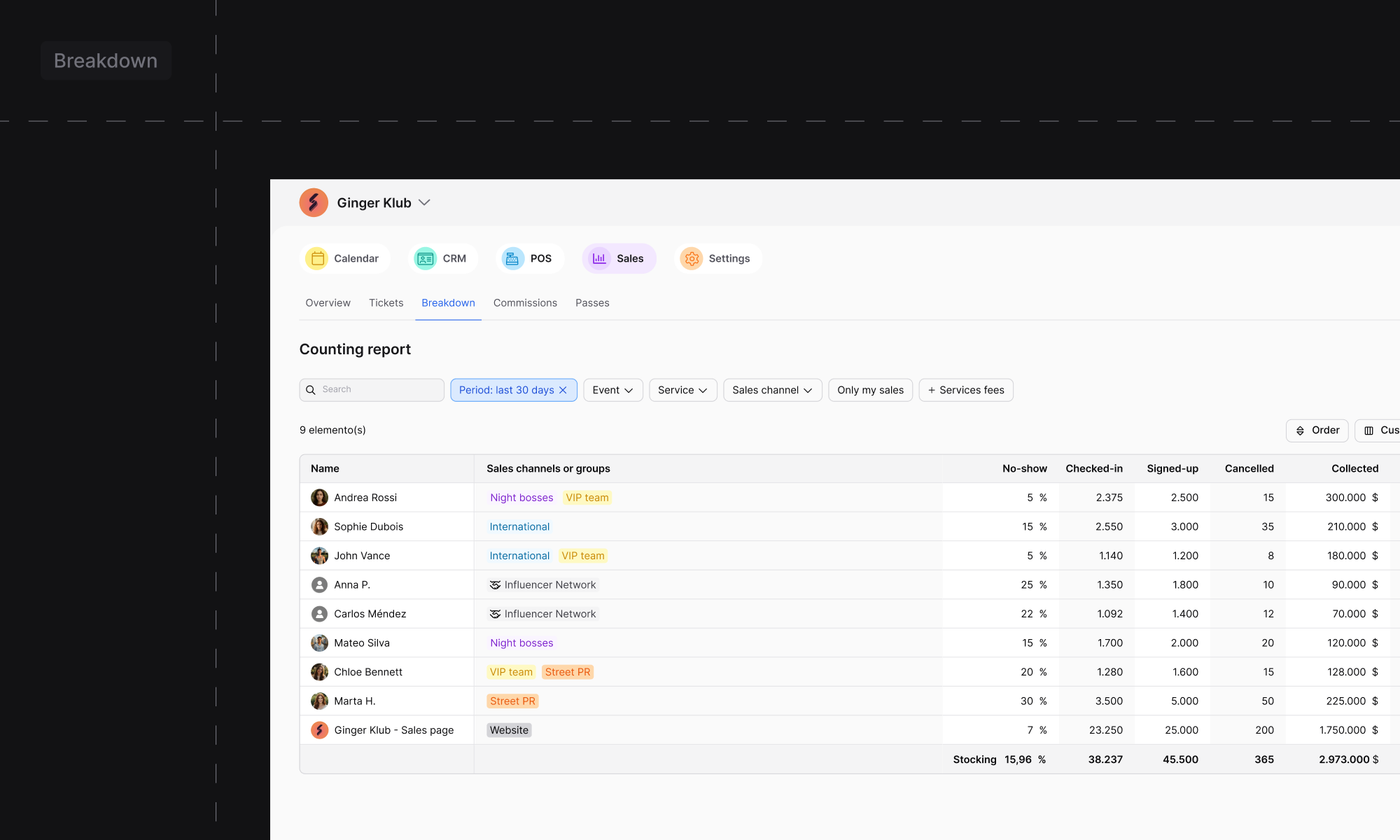
Access gets logged in real time: who came in, at what time, through which promoter, from which channel. At the end of the night you have the exact count of how many people from each list actually crossed the door. Commissions get calculated on real check-ins, not submitted names.
And the next morning, when you pull the post-event report, you can see which promoter has the best list-to-door conversion, which one brings the attendee who spends most at the bar, and which one generates volume on paper but barely moves the register. With that information, the next conversation you have with your promoter network happens with data on the table, not gut feel.
Structure isn't distrust
One of the most common reasons venues don't change this system is the feeling that adding structure on top of a promoter network sends a signal of distrust to people you've worked with for years. It doesn't. Promoters who genuinely deliver have nothing to lose from a system that measures real results. The only ones who lose are the ones who were being paid on numbers that couldn't be verified.
Paying based on verified check-ins instead of submitted names isn't a control measure. It's simply how it should work. The only way to know which part of your distribution network is actually working, and the only way to properly reward the people who deserve it.
Managing guest lists on iMessage isn't a temporary workaround you've been meaning to fix. For most venues it's become the permanent system. And that has a real cost that gets paid every Saturday night while nobody's measuring it.