
- Selling tickets isn't the whole business anymore
- Your customer database is your best revenue channel
- Make your ad spend work harder with your own data
- How to sell more before you even open the box office
- Personalize offers to raise your average ticket
- The takeaways for long-term event revenue growth
Turn insights into smarter operations
Get startedShare
13 min read
Aug 25, 2026
How to increase event revenue with your customer database
Acquiring a new customer costs far more than winning back someone who already came to one of your events. Yet most operators still pour the bulk of their marketing budget into cold acquisition while their own customer database sits idle. If you want to increase event revenue, build guest loyalty, and sell more without spending more on ads, the answer is in the data you already have.
That audience is your most profitable asset. They already know you, they already bought from you, and you already know what they spend and on what. The question that decides most of your next event's revenue isn't how many new people you can reach. It's why you aren't selling to the ones who already belong to you.
This article breaks down how to stop treating your customer list as a dead file and start treating it as what it actually is: your cheapest sales channel, and the one that converts best.
Selling tickets isn't the whole business anymore
The industry's core mistake is treating two very different things as the same: reaching an audience and owning it.
Renting an audience vs. owning it
When you sell through a ticketing marketplace, you get access to buyers for one night. That's useful in a discovery phase, for venues trying to reach new crowds or that haven't built a brand strong enough yet to stand out from the competition.
But that's where the relationship ends. The customer, and everything you'd want to know about them (email, phone number, what they bought, how much they spent) stays inside that platform's app, not in your system. The buying journey belongs to the marketplace, and whatever data you can pull from it is limited and comes on their terms. The next time that customer opens the site where they bought your ticket, they'll get recommended other venues, possibly your direct competitors. You end up funding the acquisition of a customer that a third party keeps, resells, or hands to the venue down the street.
Owning your audience flips that. When the sale runs through your own brand from start to finish, the buying experience is consistent from the first click and the customer associates it with you, not a platform. It doesn't matter whether you use Microsites or embed checkout directly on your own website, either way the experience is yours. Every person who buys from you gets logged in your own system with their full history: which events they attended, what type of ticket or package they bought, how much they spent, how often they come back, and where they came from. And the part that matters most: that record belongs to you, and no intermediary can claim it or monetize it on the side.
The same logic applies to how people find you. When someone searches for your event on Google and the sale runs through a marketplace, that marketplace is what ranks for your own event's name, not you. You're paying, in visibility, to have Google hand your audience to somebody else's site. When the sale is yours, that traffic already searching for your name lands directly on your page, no middleman, no cost per click.
Your brand shows up at every touchpoint
Your brand doesn't stop at checkout. The digital ticket, the confirmation, and the reminders all carry your identity, and with Apple Wallet or Google Wallet your event sits saved on the guest's phone, under your name, from purchase to door. Every one of those touchpoints is yours, and every one is also a sales opportunity: a banner on the confirmation screen, an upsell before the event. All of that disappears the moment a third party owns the sale.
And here's the part most operators haven't caught up to yet: selling out is no longer the end goal. Filling the room and walking away with nothing but that night's box office is half the job. The other half is what you do with that crowd starting the next morning. A sold-out night isn't enough on its own anymore.
Your customer database is your best revenue channel
Owned channels, email and SMS, deliver open and conversion rates no social algorithm will ever guarantee you, because you're not bidding against anyone for that space: you land straight in your customer's inbox and on their phone, no auction required.
According to Fourvenues data, the average open rate for email campaigns among organizations running on our CRM is above 50%, with a CTR above 10%. SMS performs even better, with open rates above 95%. Both numbers sit well above the industry average, which hovers around 43%.
The takeaway: the problem isn't a lack of channels. It's that operators keep chasing cold acquisition while sitting on a warm database ready to be re-activated, the same crowd that can cover an event's costs before a single ad dollar goes out the door.
Start with the people who already showed up
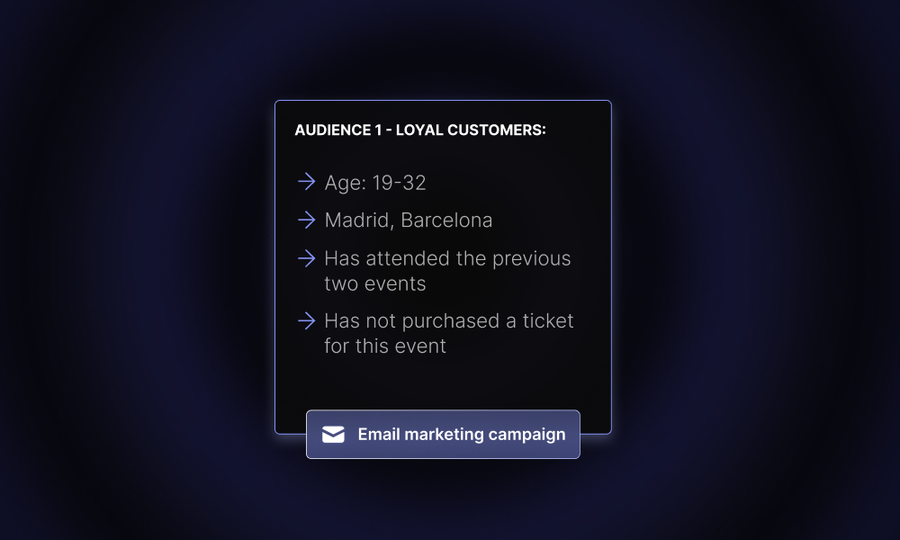
The first sale on your next event shouldn't come from a stranger. It should go to the person who was at your last one, whose history you already have on file, down to how much they spent the last few times they came. That's what lets you reward your best customers, the ones who make up your core audience and stay loyal to your brand.
You can message the attendees from your last event, the ones who've come three or more times, the ones who bought a specific type of ticket. The message goes out under your own brand as the sender, not a platform's. To the customer, it's you reaching out, not a third party.
Segment your database by behavior
The guest who always books two weeks out isn't the same as the one who walks up to the box office same-day. The guest who drops real money on a VIP table isn't the same as the one who buys the cheapest ticket and spends nothing else. Talking to all of them the same way burns the channel. Most marketplaces offer a handful of custom fields in checkout that don't let you segment audiences in any meaningful way, so you end up treating your entire base as one bucket.
With Fourvenues you segment by actual behavior (when someone buys, how much they spend, how often, which events, which genre, which age range), and the message stops being a generic blast and becomes an offer that fits that specific person. That's what moves conversion, not sending more emails. It also gives you a much clearer picture of who your customer actually is, so you can start building strategies to get more value out of that relationship.
Make your ad spend work harder with your own data
Most operators put nearly their entire ad budget into Meta, TikTok, and Google without knowing which of those channels is actually selling tickets. That's not an accident: every platform shows you the numbers that make it look good, and handles attribution on its own terms. You end up staring at reach, impressions, and clicks, and none of those numbers tell you how many tickets a campaign sold, at what cost, or what kind of customer is coming in through each channel. You're setting your budget blind.
Better campaign performance with real audience data
A paid campaign targeting "25 to 35-year-olds interested in electronic music" is firing at a generic interest. A campaign targeting people who already bought from you, people who started checkout and didn't finish, or lookalikes built from your best customers, is firing at real behavior. The performance gap is significant, because conversion rates run much higher.
With your own database, you can build those audiences and push them into Meta and TikTok: your buyers for retention, cart-abandoners for recovery, and lookalikes of your highest-value customers for smarter acquisition. You can also exclude anyone who already has a ticket, so you're not paying to show an ad to someone who's already bought. According to Fourvenues data, using owned audiences instead of generic interest targeting improves cost per acquisition by roughly 40%.
That measurement holds up because it doesn't rely solely on the browser pixel, which gets blocked by ad blockers, Safari, or incognito mode. Fourvenues also sends each sale server-to-server directly to Meta and TikTok, so the conversion registers even when the browser blocks it. On that foundation, you stop looking at views and start seeing which campaign, which channel, and which promoter is actually driving purchases. Every sale gets attributed to its source. You know the money you put into a campaign came back in tickets, or you know it didn't and you cut it. That's the difference between guessing and knowing which channel is actually moving your revenue.
How to sell more before you even open the box office
Demand has gotten a lot less predictable over the past few years, as supply has grown and uncertainty with it. The instinct to counter that is often to overbook the lineup, spending thousands per event before a single ticket sells. Opening sales without knowing how much demand exists is too big a bet to make blind. Fourvenues lets you take that risk off the table by capturing interest before tickets even go live.
Validate demand before you book the night
A pre-registration flow lets people interested in your next event raise their hand and get logged into your database before a single ticket exists. You know how many people want to come, you have their contact information, and you can start working that list immediately. It's how you size capacity, plan your marketing spend, and open sales with warm demand instead of a cold launch.
Take a club booking a headliner that comes with real financial risk, with no clear read on whether demand will cover the cost. Sending a private early-access message to its most loyal attendees gives it a real read on how sales will go, and lets it act on that before committing a single dollar.
Turn interest into sales from day one
By the time you open sales, you already have a list of people who raised their hand for that specific event. Send them a direct payment link so they can buy without going through the general funnel. Less friction, fewer steps, higher conversion. The same mechanism works for VIP tables and whatever your promoters are managing: a direct link, the customer pays, the table or ticket is locked in. No email chains, no manual charges, no sale falling through the cracks.
Personalize offers to raise your average ticket
When occupancy is soft or online sales stall, the industry's default move is to cut the price, hand out free tickets or guest-list spots, or pack in extra people just to make the room look full. That's the worst move you can make in public. Dropping from $40 to $30 in plain sight does two kinds of damage at once: it tells the market your product is worth less, and it teaches the guest who was willing to pay $40 that waiting gets them a discount. Once you raise a price, you can't publicly lower it without hurting the brand. And you're fooling yourself either way, because a full room isn't a profitable room. What matters is average spend per guest, not headcount.
Personalize promotions without cutting your price
With your database segmented by value, you can give each type of customer the right offer without ever moving the public price. Someone who hasn't been back in a while gets a reason to return. Your highest-value guests get first access, before anyone else. The customer who always books early gets rewarded for that habit. The system tags those profiles inside your database automatically (who books furthest out, who spends the most on tables, who comes back most often), so you're not guessing who's who. You decide who gets what and when. That's a business decision, not a button.
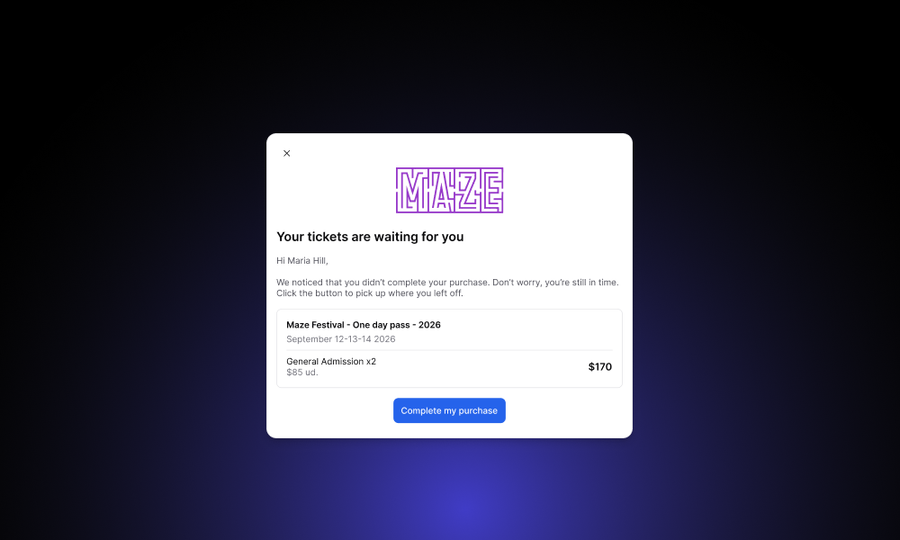
Recover abandoned carts automatically
Some share of your audience starts checkout and never finishes. They get distracted, hesitate, close the tab. That sale was one step from closing, and it's easy to write it off. You don't have to. When someone starts checkout and doesn't complete it, the system automatically sends a message to bring them back and close the sale. It's recovering money that was already almost yours, with no manual work involved. According to Fourvenues data, cart recovery alone can add more than 15% in incremental revenue.
Sell add-ons before the event to raise average spend
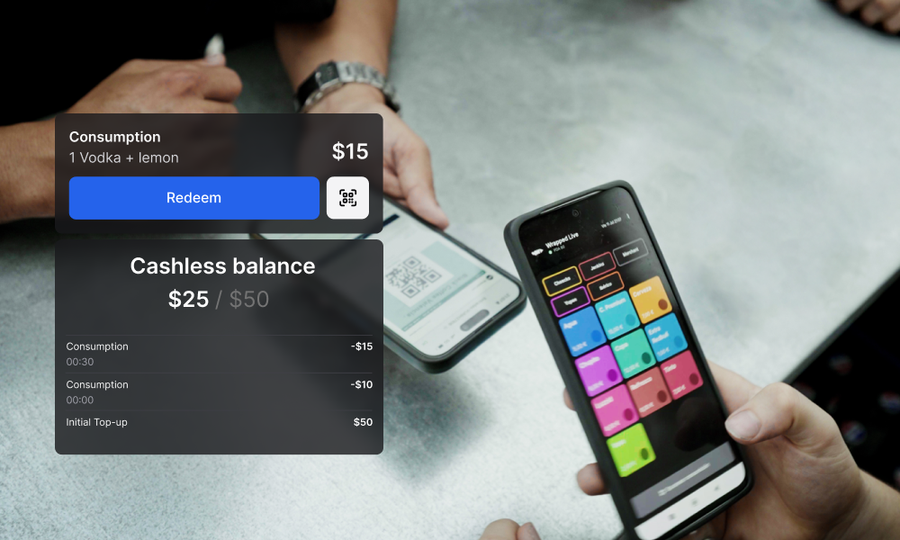
Your customer is already coming. Is that where it ends? The real goal isn't ticket count, it's average revenue per guest. That's where add-ons come in. If someone buys a drink package, express entry, merchandise, or a shuttle before they even walk in, that's spend locked in well before the event starts. With FV Cashless, you can go further and run promotions that load credit directly onto the guest's ticket in advance, generating prepaid spend before doors even open. You raise the average ticket and lock in spend before the door, which is where the real revenue sits.
The takeaways for long-term event revenue growth
Selling the ticket isn't the finish line, it's the starting point. The real value is in keeping the customer, not cashing out one night's box office.
- Reactivation beats acquisition. Sell to the people who already showed up before you spend a dollar on cold traffic.
- Your own data makes paid ads pay off. Behavior-based audiences outperform generic interest targeting, and you finally know which campaign is actually selling.
- Sell before you open. Capture demand with pre-registration and convert it with a direct link.
- Don't cut the price, personalize the offer. Give each profile what they actually value without touching your public rate, and recover the ones who almost bought.
This entire approach rests on one idea: the data you need is already being generated by your own operation. The ticket bought in advance and scanned at the door, the drink redeemed at the bar, the table that closes, the credit loaded onto a wristband. Fourvenues is the operating system that connects that operation to the business insight that matters, so you can maximize revenue instead of running every event blind.
It's the system behind some of the leading names in nightlife and live entertainment, including Grupo Five. Want to see it in action? Request a demo.
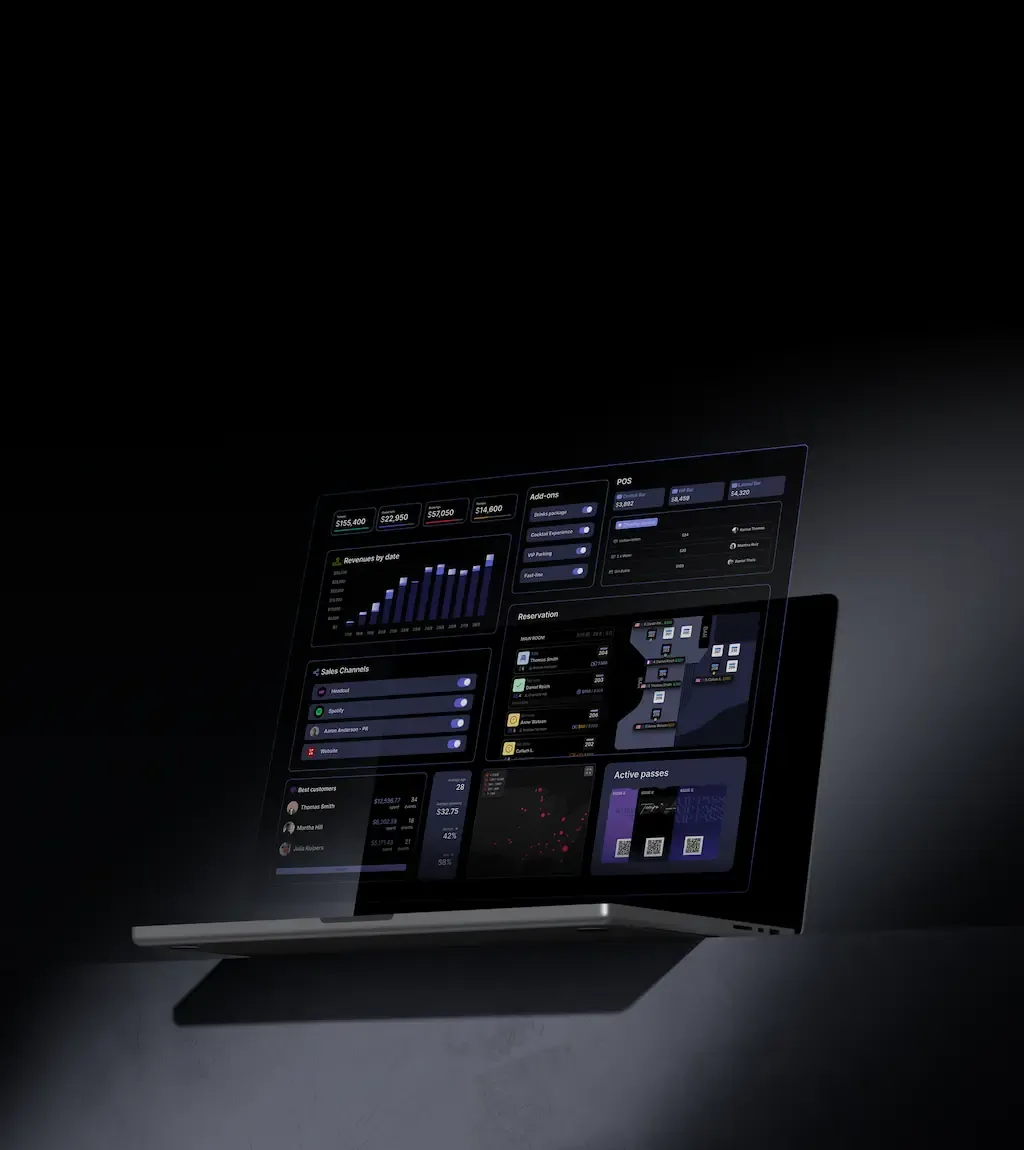
The organizations setting the pace in nightlife already have a system behind them.
Request a demoTags